

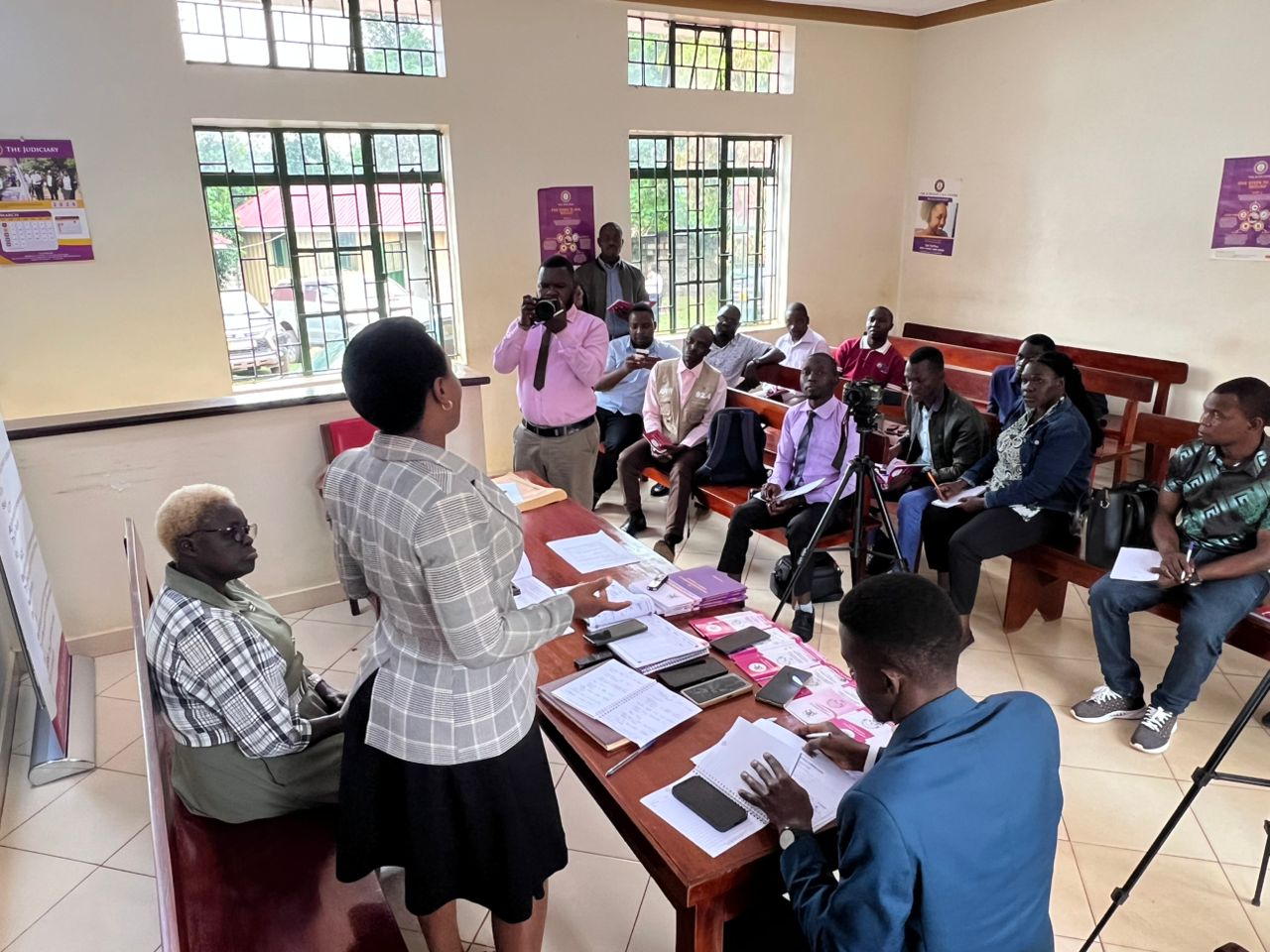
The Judicial Service Commission has urged stakeholders across the country to help sensitise communities against committing crimes as part of efforts to reduce the growing backlog of cases in courts.
Speaking during a legal education engagement with Bunyoro court reporters at the Hoima Magistrates Court, the commission’s Under Secretary, Jane Margret Akurut, acknowledged that courts are struggling with heavy workloads due to a shortage of judicial officers.
Akurut said prevention of crime and resolving minor disputes at the community level could significantly reduce the number of cases reaching courts.
“Every day we have people being brought to court, but we have limited judges. The ideal way out is for stakeholders to step in and sensitise people to reduce committing crimes, but also allow small cases to be resolved at the village level. Then we shall reduce cases in court and our judges will deliver,” she said.
According to Akurut, the recommended workload is one judge handling about 300 cases, but the current situation is far more demanding.
“Currently the ratio is about one judge attending to 14,000 people, which is way too big and one of the reasons people complain about delayed justice,” she said.
She noted that Uganda currently has about 120 judges, and increasing that number depends largely on the availability of funding for wages.
“We are very interested in having more judges, but this goes with availability of wage allocations. If we focus on prevention of crimes, it will also help because even our prisons are full now,” Akurut added.
Akurut also addressed complaints from the public about alleged unfair decisions by some judicial officers, advising citizens to formally report such concerns to the commission.
She said the commission is considering establishing offices at district level in partnership with local authorities to improve accessibility and supervision of judicial officers, noting that the high cost of renting office space has slowed the process.
Meanwhile, Hoima Grade One Magistrate Juliana Kimono highlighted the pressure faced by judicial officers due to the shortage of staff.
Kimono said she handles more than 20 cases daily and is also required to cover additional jurisdictions.
“Imagine I have to serve Hoima, then go to Buseruka, and now cover up for my colleague in Buliisa who is sick. We need more judicial officers recruited so that people can get justice in time,” she said.
She added that some sub-counties operate without state prosecutors, further slowing the administration of justice.
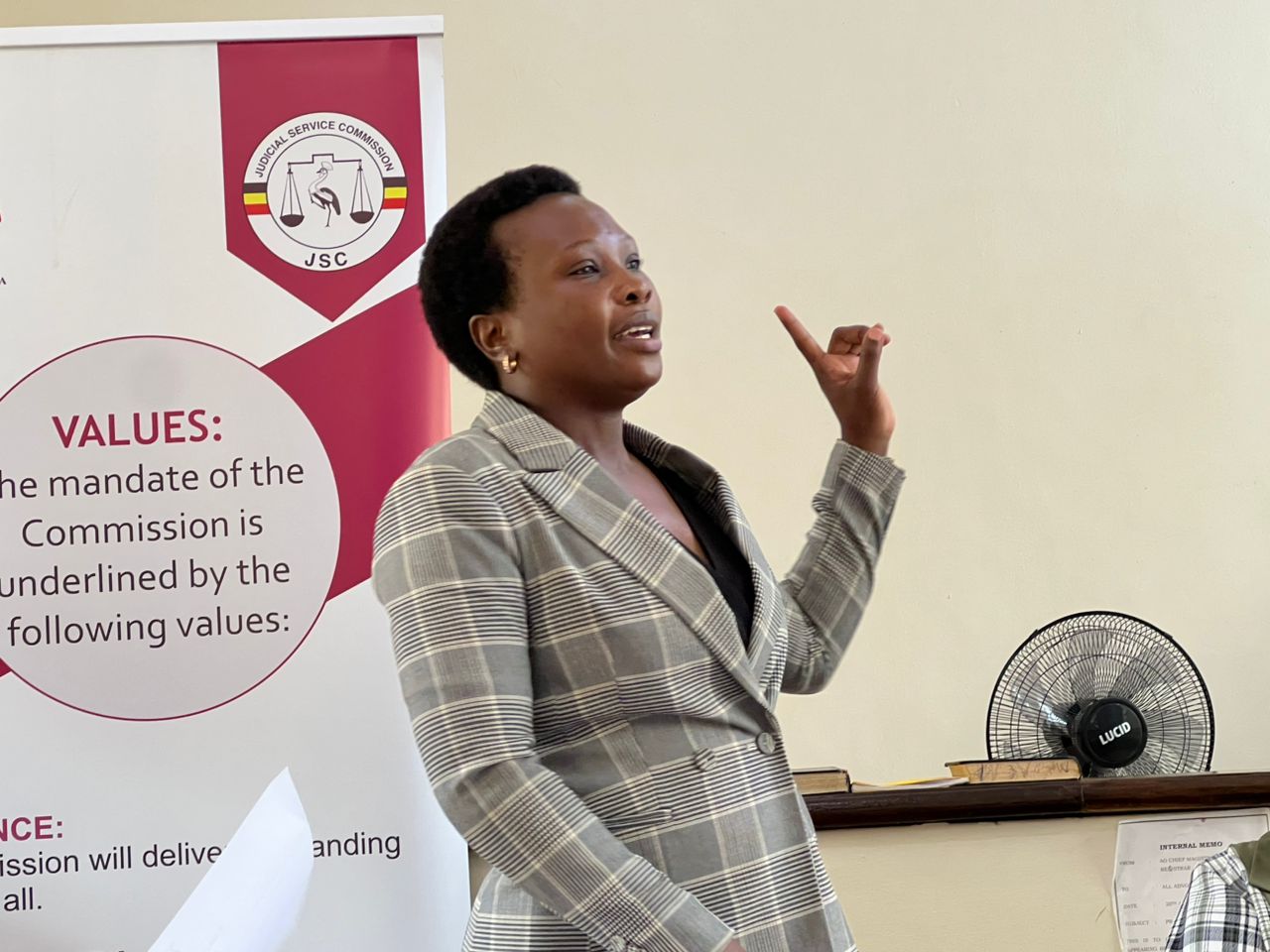
Kimono attributed the growing number of cases partly to Uganda’s increasing population and called on government to recruit more staff to strengthen the justice system.
Both the commission and the judiciary also expressed willingness to work closely with the media to improve public awareness about the justice system.
However, Kimono noted that concerns about personal security and privacy sometimes make judicial officers cautious when dealing with media coverage.
She cited incidents where judges were targeted on social media, including cases where their images were manipulated or used in misleading contexts during politically sensitive cases.
According to Kimono, such incidents can expose judicial officers and their families to harassment and intimidation.
Despite these challenges, she said the judiciary remains open to working with journalists as long as clear guidelines are followed to protect the integrity of court processes and the safety of judicial officers.
